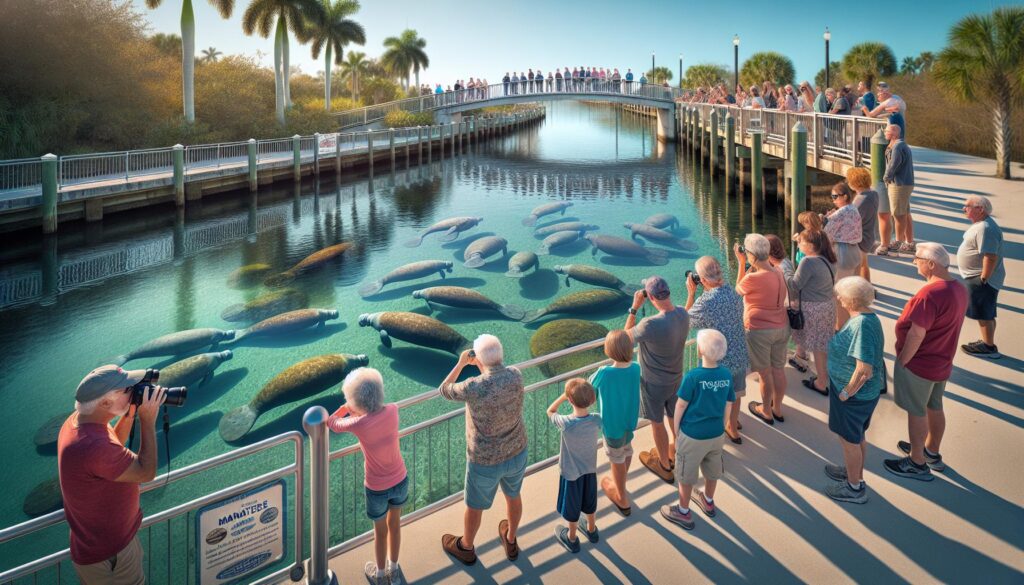
Manatees in Moore’s Creek continue to draw attention in Fort Pierce, serving as a significant habitat for these marine mammals, especially during the colder months. The presence of manatees in Moore’s Creek highlights the importance of this location for both thermal refuge and freshwater access.
Manatees in Moore’s Creek: Key Habitat in Fort Pierce
Moore’s Creek is recognized as a primary site for observing Florida manatees, particularly from November through March. These months coincide with cooler temperatures, when manatees seek out areas with slightly warmer water. According to long-term monitoring data, manatees have consistently visited the creek for decades, underscoring its ongoing ecological value.
Florida Manatees: Species Overview
Florida manatees are a subspecies of the West Indian manatee. They inhabit a variety of environments, including brackish, salt, and freshwater habitats across the state. In the Fort Pierce area, an estimated 400 to 500 manatees are present year-round, distributed throughout the region’s interconnected waterways.
Thermal Refuge and Habitat Use in Moore’s Creek
Historically, the Henry D. King Power Plant discharged warm water into Moore’s Creek, creating a reliable thermal refuge for manatees during cold weather. The plant ceased operations in 2008, but manatees continue to frequent the creek, according to ongoing monitoring efforts.
Passive Thermal Basin Function
Moore’s Creek now functions as a passive thermal basin. This means it is slightly warmer than surrounding waters during brief cold snaps, but does not maintain consistently high temperatures above 20°C (68°F). As a result, manatees are most commonly observed in the creek during periods of cold weather, seeking temporary warmth.
Freshwater Access for Manatees
In addition to warmth, Moore’s Creek provides a valuable source of freshwater, which is essential for manatees. Sightings increase when the water is fresher, indicating that manatees are drawn to the creek for both drinking water and thermal benefits. The area also serves as a nursery, where mother manatees rest with their calves.
Manatee Monitoring and Conservation Efforts
Long-term monitoring from 1997 to 2020 shows that manatee presence in Moore’s Creek has remained relatively steady, even after the closure of the power plant. Citizen science and volunteer monitoring have played a significant role in documenting manatee activity and contributing to conservation data.
Role of Citizen Science
Local volunteers and citizen scientists have been instrumental in tracking manatee presence and behavior in Moore’s Creek. Their observations help inform conservation strategies and provide valuable insights into how manatees use this habitat.
Use of Technology in Research
Ongoing research now includes the use of new technologies, such as drones and acoustic recordings, to better understand manatee habitat use. These tools help researchers gather more precise data and improve conservation planning for manatees in the Fort Pierce area.
Importance of Protecting Passive Thermal Basins
Experts emphasize the need to protect passive thermal basins like Moore’s Creek, especially as artificial warm-water refuges such as power plants are retired. Maintaining access to both warmth and freshwater is considered critical for the survival of Florida manatees, particularly during winter months.
Manatee Release and Rehabilitation
Moore’s Creek is also used as a release site for rehabilitated manatees returning to the wild. The creek’s calm waters and available resources make it suitable for manatees recovering from injury or illness.
Educational Opportunities in Fort Pierce
The Manatee Observation and Education Center in Fort Pierce provides educational experiences for residents and visitors. The center promotes awareness about manatee conservation and highlights the importance of healthy waterways for sustaining manatee populations.
- Moore’s Creek remains a vital site for manatee observation and research.
- Manatees are most frequently seen during colder months, especially when water temperatures drop.
- Freshwater access is a key factor attracting manatees to the creek.
- Ongoing monitoring and research support conservation efforts in the area.
Frequently Asked Questions About Manatees in Moore’s Creek
What is Moore’s Creek’s role for manatees in Fort Pierce?
Moore’s Creek provides a warm-water refuge and freshwater source for manatees, especially during colder months. It is a key habitat for manatee observation and research in Fort Pierce.
How many manatees are found in the Fort Pierce area?
There are an estimated 400 to 500 manatees in the broader Fort Pierce area year-round. These manatees are spread across a large network of local waterways.
Are manatees seen in Moore’s Creek year-round?
Manatees are most frequently observed in Moore’s Creek during November, December, and March, when water temperatures are cooler. Sightings can occur at other times, but are less common in warmer months.
Can you visit Moore’s Creek to see manatees?
Yes, visitors can observe manatees in Moore’s Creek, especially during the winter. The Manatee Observation and Education Center in Fort Pierce also offers educational programs and viewing opportunities.
Where are other active adult communities for manatee observation in PSL?
While Moore’s Creek in Fort Pierce is a primary site, there are additional areas throughout the Treasure Coast where manatees can be observed. These include other local creeks, rivers, and estuaries in the region.