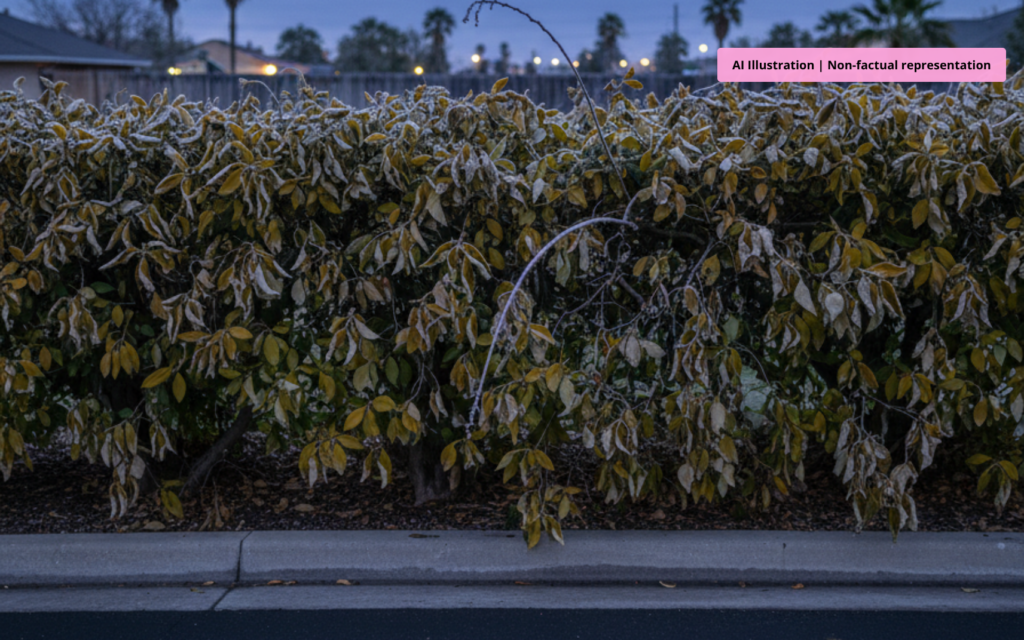
Freeze-damaged Clusia hedges are a common sight after recent freezes, often appearing completely brown. Understanding the freeze-damaged Clusia hedge recovery protocol can help property owners avoid costly replacements and support healthy regrowth. For those considering alternatives, exploring Florida frost-resistant plants as replacements for cold-damaged landscapes can offer resilient options for future-proofing your yard.
Freeze-Damaged Clusia Hedge Recovery Protocol Explained
Many Clusia hedges that look brown after a freeze are not necessarily dead. Following a clear recovery protocol can save between $8,000 and $15,000 in replacement costs, according to expert guidance. In addition to recovery, enhancing your landscape with Florida-friendly trees can further improve your property’s resilience and beauty. For more detailed information on freeze damage and Clusia hedge care guidance, consult the University of Florida IFAS Extension (freeze damage and Clusia hedge care guidance).
How to Assess Freeze-Damaged Clusia Hedges
The Scratch Test for Clusia Hedges
The first step in the freeze-damaged Clusia hedge recovery protocol is the scratch test. Scrape the bark of a main stem with your fingernail. If you see green underneath, the stem is alive and can recover. Brown leaves alone do not mean the plant is dead.
Why Timing Is Crucial for Recovery
Experts advise not to prune aggressively right after freeze damage. Pruning too soon can remove living tissue that is about to recover. Also, do not fertilize until new shoots are visible. Fertilizing too early can trigger sensitive new growth that may be harmed by another cold snap. Severe weather events, such as Hurricane Milton and tornadoes on the Treasure Coast, have shown the importance of timing and proper care in landscape recovery. For up-to-date freeze advisories and temperature outlooks, refer to the National Weather Service (freeze advisories and temperature outlooks).
Step-by-Step Freeze-Damaged Clusia Hedge Recovery Protocol
- Perform the scratch test on main stems to check for green tissue.
- Water only when the soil is dry 4–6 inches down.
- Wait for new growth to appear before taking further action.
- Prune back dead stems to where they are green, but only after new growth is visible.
Freeze-Damaged Clusia Hedge Recovery Timeline
New growth on freeze-damaged Clusia hedges typically appears in 4–8 weeks once temperatures are consistently in the 70s and 80s. Full recovery, including restoration of privacy, usually takes 6–12 months. This timeline allows the plant to show which parts are truly dead and which are dormant.
Frequently Asked Questions About Freeze-Damaged Clusia Hedge Recovery Protocol
What is the freeze-damaged Clusia hedge recovery protocol?
The recovery protocol involves performing a scratch test to check for living tissue, watering only when the soil is dry, waiting for new growth, and pruning dead stems only after new shoots appear.
How long does it take for a freeze-damaged Clusia hedge to recover?
New growth usually appears in 4–8 weeks when temperatures are warm. Full recovery and privacy restoration can take 6–12 months.
Should I prune my Clusia hedge right after a freeze?
No, do not prune aggressively immediately after a freeze. Wait until new growth is visible, then prune only the dead stems back to living tissue.
Can I fertilize my Clusia hedge after freeze damage?
Do not fertilize until you see new shoots. Fertilizing too early can cause sensitive new growth that may be damaged by further cold.
How do I know if my Clusia hedge is still alive after a freeze?
Use the scratch test: scrape the bark of a main stem. If you see green underneath, the stem is alive and likely to recover.
Port St Lucie Talks