
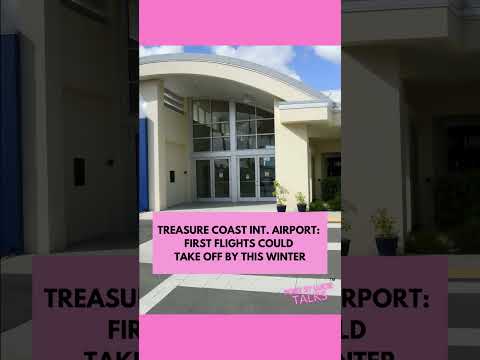
Treasure Coast International Airport in St. Lucie County is preparing for significant expansion, with discussions underway about launching scheduled commercial flights as early as winter 2025. The airport’s strategic location and recent infrastructure improvements position it as a key hub for aviation and logistics on Florida’s Treasure Coast.
Treasure Coast International Airport: Facilities and Operations
Treasure Coast International Airport is situated approximately three miles northwest of Fort Pierce in St. Lucie County, Florida. The airport serves as a general aviation facility and supports a wide range of aircraft operations due to its extensive infrastructure.
The airport covers more than 3,800 acres, making it one of the largest aviation facilities in the region. According to airport officials, over 1,000 acres remain available for future industrial and commercial development, providing significant opportunities for business growth.
Main Runways and Aviation Activity
The airport features three paved runways, including a primary runway exceeding 6,400 feet in length. This allows the airport to accommodate various aircraft types, from small private planes to larger business jets.
Officials report that nearly 200 aircraft are based at the airport, which sees more than 190,000 annual aircraft operations. Most of these operations are related to general aviation and flight training, reflecting the airport’s role as a regional aviation center.
Business Services and Economic Development
Treasure Coast International Airport is home to several aviation-related businesses. These include aircraft maintenance providers, storage facilities, flight schools, air taxi and charter operators, and medical transport services.
The airport also features a U.S. Customs and Border Protection office, designating it as a port of entry for international flights. This is particularly important for flights arriving from the Bahamas and other international destinations.
Foreign Trade Zone and Logistics Advantages
The airport is located within Foreign Trade Zone #218. This designation offers logistical and tax advantages for businesses operating in the area, supporting the growth of industrial and logistics activities near the airport.
Over five million square feet of new industrial and logistics facilities have been developed in recent years near the airport, according to local economic development organizations. These facilities benefit from the airport’s proximity and transportation infrastructure.
Recent Infrastructure Upgrades
Officials have completed several infrastructure improvements at Treasure Coast International Airport. These include runway upgrades, the addition of a new north-south connector taxiway, and renovations to the passenger terminal and customs facilities.
These enhancements are designed to increase operational capacity and improve the experience for both general aviation and potential commercial passengers.
Strategic Location and Transportation Access
The airport is positioned about halfway between Orlando and Miami, providing easy access to major transportation corridors such as Interstate 95 and the Florida Turnpike. This location supports both regional and national connectivity for businesses and travelers.
Population Growth and Regional Demand
Population growth in St. Lucie County and the surrounding region is projected to outpace most other South Florida counties. According to regional planning committees, this increase is expected to drive demand for enhanced transportation and logistics services.
The airport’s available land and upgraded facilities make it well-positioned to meet future needs as the region continues to expand.
Potential for Commercial Passenger Flights
There is ongoing discussion and planning regarding the introduction of scheduled commercial passenger flights at Treasure Coast International Airport. Local economic development organizations and regional planning committees are actively supporting efforts to attract commercial airline service.
Experts indicate that adding commercial flights could significantly boost regional economic growth, attract new businesses, and improve travel options for residents and visitors. The airport’s infrastructure and location are considered strong assets for future commercial aviation development.
Requirements for Commercial Service Launch
The launch of commercial flights will depend on several factors:
- Airline interest and commitment to scheduled service
- Readiness of airport infrastructure to handle commercial operations
- Demonstrated market demand for passenger flights
Regional leaders view the possibility of commercial service as realistic in the near term, but emphasize that final decisions will depend on these key considerations.
Details may be updated as planning and negotiations continue, according to official sources.
Frequently Asked Questions About Treasure Coast International Airport
What is Treasure Coast International Airport?
Treasure Coast International Airport is a general aviation airport located in St. Lucie County, Florida, near Fort Pierce. It serves private, business, and training flights and is a designated port of entry for international arrivals.
How much land is available for development at the airport?
The airport spans over 3,800 acres, with more than 1,000 acres available for future industrial and commercial development, according to airport officials.
Are there commercial passenger flights at Treasure Coast International Airport?
Currently, there are no scheduled commercial passenger flights. Regional planning committees are discussing the launch of commercial service, with possible flights as early as winter 2025, depending on airline interest and infrastructure readiness.
Can you fly internationally from Treasure Coast International Airport?
Yes, the airport has a U.S. Customs and Border Protection office and is a designated port of entry, especially for flights arriving from the Bahamas and other international locations.
Where are the main transportation connections near the airport?
The airport is close to major highways, including Interstate 95 and the Florida Turnpike, making it accessible from both Orlando and Miami as well as other parts of Florida.