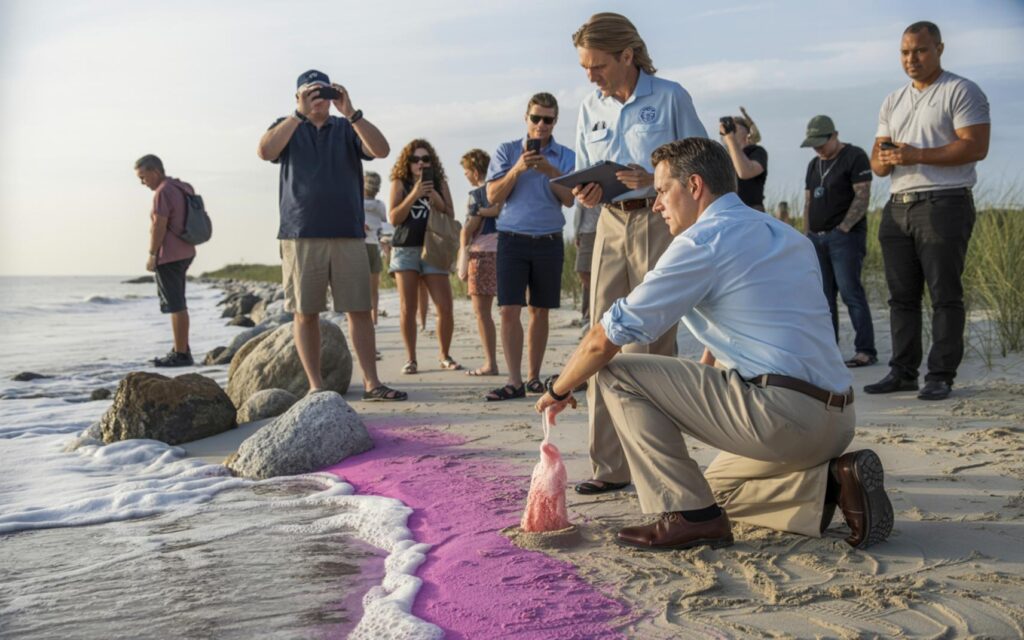
Pink sand at Fort Pierce Jetty drew significant attention from visitors and local residents, prompting an official investigation by state environmental agencies. According to environmental officials, the pink coloration observed in the sand and sea-foam was determined to be a natural occurrence, not a result of pollution or chemical spills.
Pink Sand at Fort Pierce Jetty Prompts Official Response
Reports of vivid pink sand and sea-foam at Fort Pierce Jetty led to a swift response from state and local environmental agencies. The jetty, located on Florida’s east coast near the Indian River Lagoon, is a popular site for recreation and fishing. The unusual event raised immediate public concern about potential risks to beachgoers and wildlife.
Investigation of Pink Sand Event by Environmental Agencies
Environmental officials collected samples from the affected area to determine the source of the pink coloration. According to preliminary findings from state agencies and local oceanographic experts, the sand and foam did not contain harmful contaminants or toxins. The investigation specifically ruled out pollution, chemical spills, or any anthropogenic sources as causes.
Sample Analysis and Findings
Laboratory analysis confirmed that the pink coloration was caused by naturally occurring marine organisms or minerals. Officials reported that no dangerous substances were detected in the sand, water, or sea-foam. The area was deemed safe for public use, and no closures or restrictions were implemented.
Natural Factors Behind Unusual Sand Coloration
Experts highlight that unusual beach coloration events, such as the pink sand at Fort Pierce Jetty, are often linked to blooms of harmless microorganisms or the presence of specific minerals. These phenomena can be influenced by seasonal changes, water temperature, and nutrient levels in the coastal environment.
Similar Events in Coastal Regions
While rare, similar natural coloration events have been documented in other coastal areas. According to environmental experts, these occurrences are generally not a cause for alarm when no toxins or hazardous substances are present. The current event at Fort Pierce Jetty fits this pattern, with no evidence of environmental harm.
Ongoing Environmental Monitoring at Fort Pierce Jetty
The Fort Pierce Jetty and adjacent Indian River Lagoon are subject to regular environmental assessments due to their ecological importance and proximity to protected habitats. The region has a history of beach nourishment and sand placement projects, but these projects use sand that matches the natural composition of local beaches.
Public Safety and Environmental Health
Officials confirmed that no ongoing threat to public health or wildlife was identified following the pink sand event. The area remains open for recreation, and continued monitoring is recommended to ensure that no underlying environmental issues are missed. Public concern about water quality and beach safety remains high in areas with a history of environmental incidents, which contributed to the rapid response from authorities.
- Location: Fort Pierce Jetty, Florida
- Main Finding: Pink sand caused by natural marine organisms or minerals
- Public Health: No harmful contaminants detected
- Status: Area remains open for recreation
Frequently Asked Questions About Pink Sand at Fort Pierce Jetty
What caused the pink sand at Fort Pierce Jetty?
The pink sand at Fort Pierce Jetty was caused by naturally occurring marine organisms or minerals, according to environmental agencies. No pollution or chemical spills were involved.
Is the pink sand at Fort Pierce Jetty dangerous?
Officials report that no harmful contaminants or toxins were found in the sand, water, or sea-foam. The area is considered safe for visitors and wildlife.
Are similar pink sand events common in Florida?
Such events are rare but have been documented in other coastal regions. They are generally linked to natural factors and are not usually a cause for concern if no toxins are present.
Can you visit Fort Pierce Jetty after the pink sand event?
Yes, the area remains open for recreation. Environmental officials have not issued any closures or restrictions following the event.
Where else can pink sand be found in Florida?
Pink sand is uncommon in Florida, but similar natural coloration events can occur in coastal areas with unique mineral or microorganism activity. Most beaches in Florida have white or tan sand.
Details may be updated as investigation continues. For the latest information, refer to official sources such as the Florida Department of Environmental Protection and local environmental agencies.