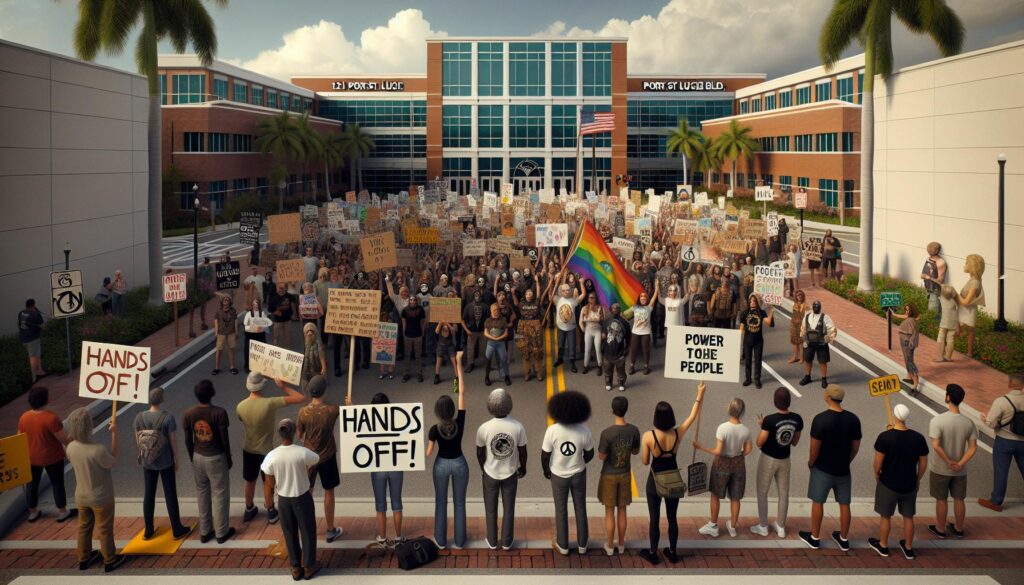
The Hands Off Mass Mobilization on April 5, 2025, marked a major moment of protest in the United States, with coordinated demonstrations across all 50 states and several international cities. The Hands Off Mass Mobilization drew millions of participants, making it one of the largest protest actions in recent U.S. history.
Hands Off Mass Mobilization: Scale and Participation
Organizers estimated that between three to five million people joined the Hands Off Mass Mobilization nationwide. This turnout places the event among the most significant single-day protests in recent decades, comparable to the 2017 Women’s March and the 2020 racial justice demonstrations.
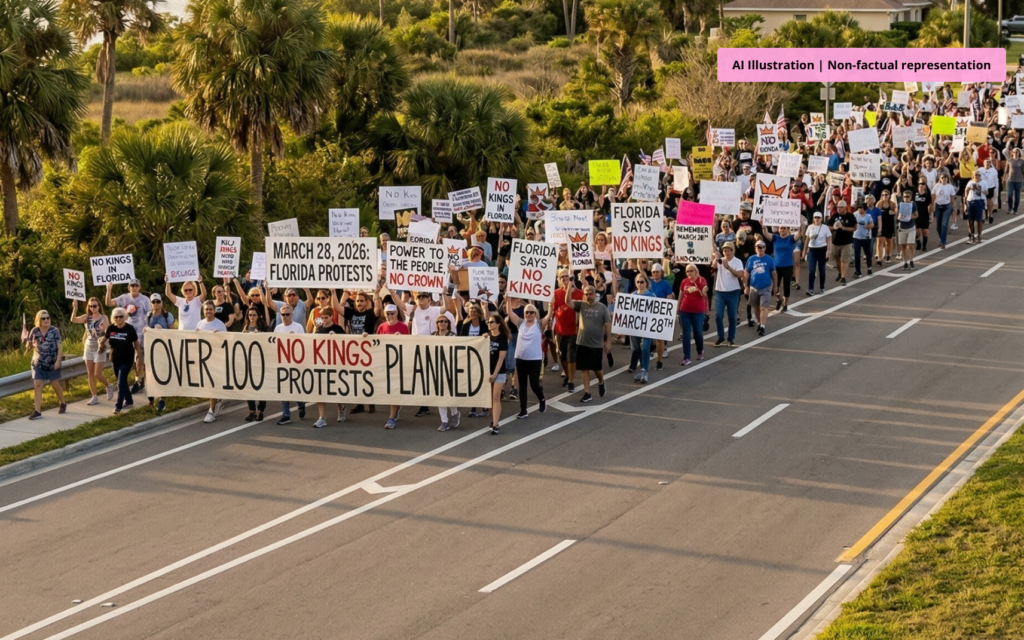
In Florida, the Hands Off Mass Mobilization saw thousands of participants in Miami, about 1,000 in Pensacola, and nearly 2,000 in The Villages. Hundreds more attended rallies in Brevard County, Lakeland, Palm Beach Gardens, and Tallahassee. Additional gatherings were reported in Daytona Beach, DeLand, Palm Coast, Port Orange, Cocoa, Sanford, St. Petersburg, Hollywood, Key West, Stuart, and Tamarac.
Organizers and Coalition Involvement
The Hands Off Mass Mobilization was organized by a coalition of over 150 groups. These included progressive organizations, labor unions, pro-democracy advocates, civil rights groups, LGBTQ+ organizations, and women’s rights networks. The decentralized nature of the protests allowed for local rallies to be organized organically by community members, rather than only national groups.
This broad coalition reflected the movement’s emphasis on multiple issues rather than a single-issue focus. According to organizers, the structure enabled widespread participation and engagement at the local level throughout the United States.
Main Issues and Policy Opposition
The Hands Off Mass Mobilization centered on opposition to several policies enacted by the Trump administration during its second term. Protesters highlighted concerns about new global tariffs, which they argued contributed to economic instability. Major cuts to federal agencies and the government workforce were also a focus, as well as threats to union rights and labor protections.
Participants raised alarm about immigration raids viewed as politically motivated, rollbacks on LGBTQ+ rights, and proposed changes to Social Security, Medicare, and Medicaid. Restrictions and bans on reproductive rights, including abortion and birth control, were also cited as major grievances. Many expressed concern about democratic backsliding and increased authoritarianism in federal governance.
Protesters’ Demands and the Project 2025 Agenda
Demonstrators at the Hands Off Mass Mobilization articulated three main demands:
- End what they described as a billionaire takeover and corruption within the administration
- Stop cuts to federal programs relied upon by working people
- Halt attacks on immigrants, transgender individuals, and other marginalized communities
According to organizers, the April 5 protests were a direct response to the so-called “Project 2025” agenda. This agenda was described as aiming to further restrict reproductive rights and dismantle social safety nets, prompting widespread concern among advocacy groups.
Decentralized Structure and Grassroots Participation
The Hands Off Mass Mobilization was notable for its decentralized approach. Many local rallies were organized by community members, rather than being directed by national organizations. This structure allowed for diverse local concerns to be represented and for rapid mobilization across the country.
Analysts observed that this grassroots model contributed to the scale and impact of the protests. The movement drew support from a broad coalition, reflecting anxiety about threats to democratic institutions, civil liberties, and economic security.
International Solidarity and Global Response
Alongside the widespread demonstrations in the United States, the Hands Off Mass Mobilization received international attention. Solidarity protests were held in major cities such as Berlin, Paris, London, and Ottawa. These international actions reflected global concern about U.S. political developments and the potential impact on democracy and human rights worldwide.
Expert Perspectives on the Hands Off Mass Mobilization
Experts generally characterize the Hands Off Mass Mobilization as a significant display of grassroots opposition. The size and scope of the protests were compared to earlier large-scale movements, such as the 2017 Women’s March and 2020 racial justice actions.
Analysts noted that the Hands Off Mass Mobilization was fueled by a broad coalition and reflected widespread anxiety about the direction of U.S. policy. The event is widely viewed as a pivotal moment in the ongoing resistance to the Trump administration’s second-term policies, with high levels of civic engagement and public dissent.
Frequently Asked Questions About Hands Off Mass Mobilization
What is the Hands Off Mass Mobilization?
The Hands Off Mass Mobilization was a nationwide protest movement in the United States on April 5, 2025. It involved millions of participants rallying against policies enacted during the Trump administration’s second term.
How many people participated in the Hands Off Mass Mobilization?
Organizers estimated that between three to five million people joined the protests nationwide. This made it one of the largest single-day protest actions in recent U.S. history.
Where were the largest Hands Off protests held in Florida?
Major Hands Off protests in Florida took place in Miami, Pensacola, and The Villages. Additional rallies were held in cities including Brevard County, Lakeland, Palm Beach Gardens, Tallahassee, and several others.
What were the main demands of the Hands Off Mass Mobilization?
Protesters demanded an end to what they described as billionaire takeover and corruption, the protection of federal programs, and a halt to attacks on immigrants, transgender people, and other marginalized groups.
Did the Hands Off Mass Mobilization have international support?
Yes, solidarity protests were held in cities such as Berlin, Paris, London, and Ottawa. These demonstrations showed global concern about U.S. political developments in 2025.