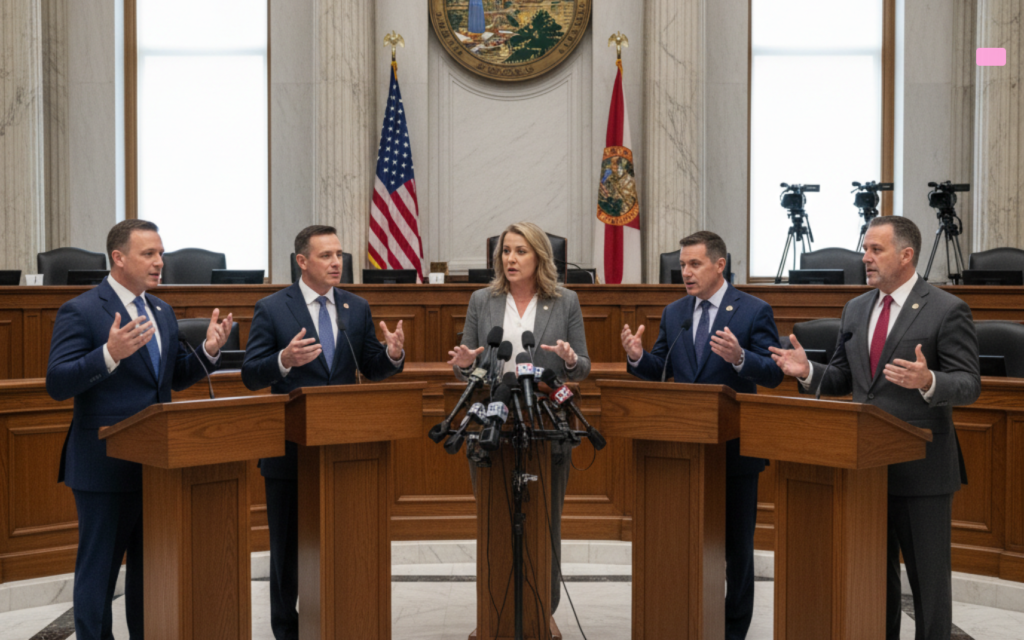
Florida property tax elimination is at the center of heated debate among lawmakers, as the Florida House of Representatives advances a measure to exempt homestead properties from non-school property taxes. The proposal, if enacted, could reshape the state’s tax landscape for homeowners, renters, businesses, and local governments.
Florida Property Tax Elimination: House Passes HJR 203
The Florida House passed HJR 203 on February 19, 2026, aiming to amend the state constitution to eliminate non-school property taxes for homestead properties starting January 1, 2027. According to the Florida House of Representatives, the bill passed by a vote of 80-30, largely along party lines. The measure replaces an earlier plan for a 10-year phaseout with immediate elimination if approved by voters in November 2026.
Homestead properties, defined as primary residences owned by full-time Florida residents, would see significant property tax relief under this plan. However, the proposal does not affect school district property taxes, which would remain in place.
Potential Impact on Non-Homestead Properties and Local Revenues
While the property tax elimination plan offers relief to homeowners, it raises concerns about shifting the tax burden to non-homestead properties. These include apartment buildings, retail stores, and other commercial properties. According to Lee County Property Appraiser Matt Caldwell, this could result in higher taxes for renters and business owners, as local governments seek to offset lost revenue.
Fort Myers Mayor Kevin Anderson highlighted the financial challenges for cities. He stated that Fort Myers collected $87 million in property taxes last year, but public safety costs alone—covering fire and police services—totaled $100 million. Anderson warned that eliminating property taxes could force cities to introduce new fees, such as fire or law enforcement assessments, or to consider alternative revenue sources. In St. Lucie County, for example, the recently adopted 21.79 millage rate for 2025 reflects how local governments are adjusting to evolving fiscal pressures.
Legislative Tensions: Senate and Governor Weigh Alternatives
The Florida Senate has not advanced a comparable bill as of late February 2026. Senate Appropriations Chair Ed Hooper emphasized the need to consider the impact on small, fiscally constrained counties, which may be affected differently by the proposed revenue shifts. Office of Governor Ron DeSantis has expressed support for a single, clear ballot measure but urged collaboration with the Senate to develop a balanced and sustainable plan.
House Speaker Daniel Perez indicated openness to Senate proposals if they materialize before the regular session ends on March 13, 2026. The lack of Senate action creates uncertainty about whether the property tax elimination amendment will appear on the November 2026 ballot.
Stakeholder Perspectives on Florida Property Tax Elimination
Supporters of the measure, such as Lynn Axten, a Florida property owner, argue that homeowners deserve relief from property taxes. “I own it. Why am I giving the government money for something they don’t own?” Axten said, reflecting the sentiment of many who support the bill. Some proponents expect that other taxes or fees may be introduced to compensate for the lost revenue, but see the elimination as a step toward lower overall taxes.
Opponents, including Rep. Anna Eskamani (D-Orlando), warn that the proposal could disproportionately benefit higher earners and shift the financial burden to renters and businesses. Caldwell described the plan as “unpopular and unlikely to pass” in its current form, citing concerns about local government funding and the potential for service cuts in growing communities. Recent trends show that even when millage rates are cut, as seen in Port St. Lucie property taxes rising despite millage rate reductions, homeowners may still face higher bills due to rising property values.
Alternative Revenue Options and Local Government Concerns
To address the projected $14.8 billion annual loss in local government revenue, lawmakers and local officials have discussed several alternatives. These include:
- Introducing new assessment fees for fire and law enforcement services
- Raising the state sales tax
- Expanding exemptions for insured properties (as proposed in HJR 209)
- Tightening caps on property value increases under the Save Our Homes amendment (HJR 213)
According to Fort Myers Mayor Anderson, “We’re a community squeezing every penny out of every dollar.” He emphasized that any reduction in property tax revenue must be balanced with the need to fund essential services.
Public Safety Protections Included in House Proposal
HJR 203 includes provisions to protect funding for law enforcement, firefighters, and first responders. According to the bill, counties and municipalities would be prohibited from reducing budgets for these services below 2024 or 2025 levels, even as property tax revenues decline. This safeguard aims to ensure that critical public safety functions are not compromised by the tax change.
Voter Approval Required for Property Tax Elimination
For the property tax elimination amendment to take effect, it must receive at least 60% approval from Florida voters in the November 2026 general election. The House version of the proposal is ready for the ballot, but Senate inaction could delay or alter the final measure presented to voters.
Earlier in 2026, eight different proposals were introduced to eliminate or reduce property taxes, reflecting the complexity and importance of the issue for Florida residents and policymakers.
Comparing House and Senate Approaches
| Aspect | House (HJR 203) | Senate Status |
|---|---|---|
| Tax Cut Scope | Full non-school homestead exemption by 2027 | No bill; focuses on county impacts |
| Revenue Offset | Protects first-responder budgets | Undecided; cautious on small counties |
| Critics’ View | Shifts to businesses/renters; $14.8B local hit | Seeks “right” balance, no timeline |
Frequently Asked Questions About Florida Property Tax Elimination
What is the Florida property tax elimination proposal?
The proposal would amend the Florida Constitution to eliminate non-school property taxes on homestead properties, which are primary residences owned by full-time residents. If approved, this change would begin on January 1, 2027.
How might Florida property tax elimination affect renters and businesses?
If property taxes are eliminated for homestead properties, local governments may shift the tax burden to non-homestead properties like apartments, retail stores, and offices. This could lead to higher costs for renters and business owners.
Are there protections for public safety funding in the proposal?
Yes, the House bill (HJR 203) prohibits local governments from reducing funding for law enforcement, firefighters, and first responders below 2024 or 2025 levels, even if property tax revenues decline.
Can you still be taxed for schools under the property tax elimination plan?
Yes, the proposal only eliminates non-school property taxes for homestead properties. School district property taxes would remain in place and continue to fund public education.
Where are decisions about property tax elimination being made?
Decisions are being made at the Florida State Capitol in Tallahassee, with the House, Senate, and Governor all playing roles in shaping the final proposal. Voters across Florida will have the final say if the measure reaches the November 2026 ballot.
Port St Lucie Talks