
Port St. Lucie population growth has made the city one of the fastest-growing urban centers in the United States, with recent estimates showing a surge to approximately 260,194 residents in 2025. This rapid expansion has significant impacts on housing, infrastructure, and the local economy, reshaping the community and its future outlook. For a comprehensive overview of the city’s ongoing transformation, see the latest growth and community highlights for 2025.
Port St. Lucie Population Growth Outpaces State and National Trends
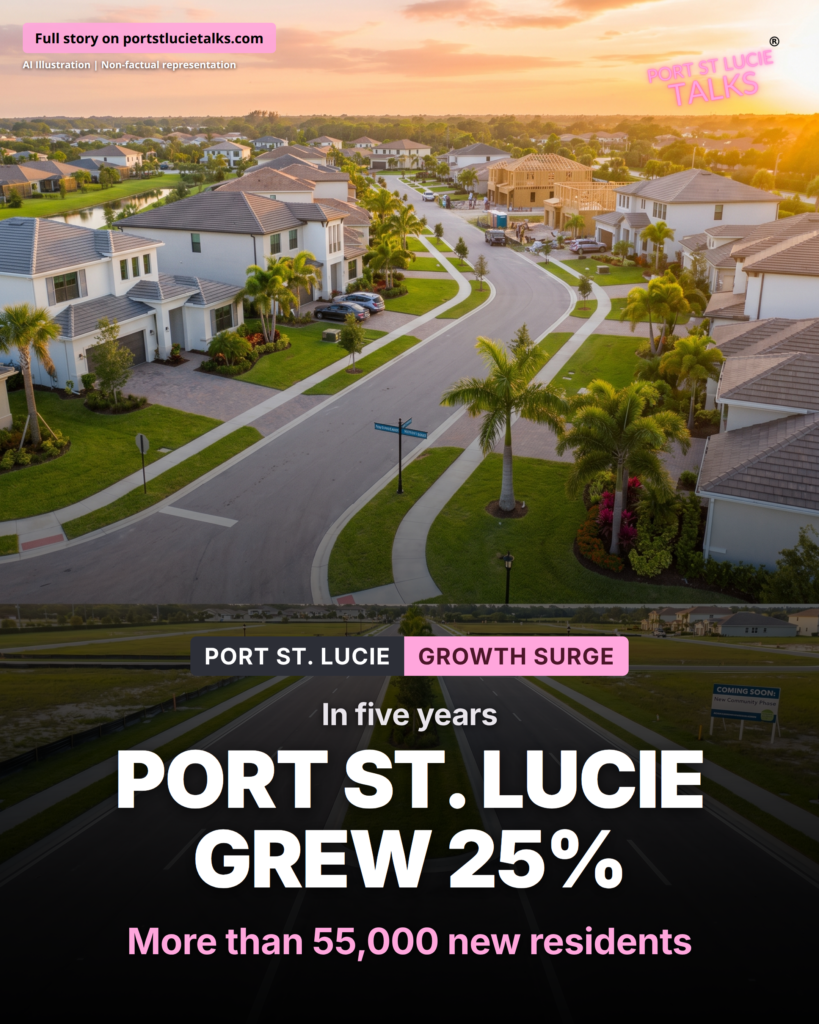
According to the U.S. Census Bureau and the University of Florida Bureau of Economic and Business Research (BEBR), Port St. Lucie has experienced a 27% increase in population since 2020, adding over 55,000 residents in just five years. This growth rate is nearly 200% faster than the city’s historical average, which saw about 50,000 new residents every 15 years. The city’s growth rate now outpaces Miami and other major Florida cities, highlighting Port St. Lucie’s rising appeal.
St. Lucie County as a whole has also grown, reaching an estimated 385,746 in 2024 and projected to surpass 419,000 by 2026. However, Port St. Lucie’s growth continues to outpace both the county and state averages, cementing its status as a leading destination for new residents in Florida and the nation.
Recent Growth Trends in Port St. Lucie
Between 2020 and 2023, the Port St. Lucie metropolitan area ranked as the second-fastest growing metro region in the United States, according to U.S. Census data. Only Lakeland, Florida, grew faster during this period, with four of the top five fastest-growing metros located in Florida.
From 2014 to 2024, estimates indicate the city expanded from 169,888 to as high as 277,789 residents, depending on the data source. Official U.S. Census counts show growth from 164,603 to 204,851, representing an 18.5% to 24.5% increase, both figures exceeding the state average of 18% and the county’s 36% rise over the same period.
Annual Increases and Migration Patterns
Annual population growth in Port St. Lucie has reached around 5% in recent years, with nearly 40,000 newcomers arriving in the last three years alone. According to national migration rankings, Port St. Lucie ZIP codes are among the most popular in the country, with 16.2 moves per 1,000 residents. To accommodate this influx, the city has unveiled 27 new development projects coming soon to Port St. Lucie, further supporting the area’s growth.
- High migration rates bring thousands of new families and remote workers each year
- Consistent ranking in national lists for fastest-growing cities and most moved-to ZIP codes
Key Drivers of Port St. Lucie Population Growth
Several factors contribute to Port St. Lucie’s rapid rise. City officials and demographic experts point to affordability, safety, and quality of life as primary attractions for new residents. Many families and remote workers are relocating from denser South Florida areas such as Fort Lauderdale and Miami.
According to city officials, Port St. Lucie’s historically low crime rates and relatively affordable housing costs are significant draws. Economic development and job opportunities continue to expand, further supporting the city’s appeal.
Why Families and Remote Workers Choose Port St. Lucie
- Affordable housing compared to neighboring metro areas
- Low crime rates and reputation for safety
- Growing job market and business investment
- Quality schools and family-friendly amenities
Impacts of Rapid Population Growth in Port St. Lucie
The surge in population is reshaping multiple aspects of life in Port St. Lucie. Increased demand for housing has led to rising prices and new residential developments throughout the city.
According to city mobility studies, the influx of residents is also straining existing infrastructure, prompting updates to transportation plans and the creation of new assessment areas, especially in the western parts of the city. Construction inflation and “extraordinary growth” have led to adjustments in mobility fees and long-term city planning.
Housing Market and Infrastructure
- Housing demand drives new construction and higher prices
- Traffic patterns are changing, with increased congestion on major roads
- Infrastructure projects underway to expand roadways and utilities
Economic Expansion and Job Growth
Economic opportunities are growing as new residents bring additional spending power and attract new businesses. The local job market is diversifying, with sectors such as healthcare, education, retail, and technology seeing increased investment.
- Job creation in construction, services, and technology
- Business relocations and expansions to serve a larger population
Population Projections and Future Outlook
Looking ahead, Port St. Lucie’s population is expected to continue rising. According to city mobility studies, the city’s study area, including surrounding enclaves, could reach 506,027 residents by 2050. This projection assumes a 25% increase every five years, highlighting the need for ongoing updates to city plans and infrastructure.
County-wide projections are similar, with St. Lucie County expected to approach 448,606 residents by 2028 under high-growth scenarios. City and county officials are actively monitoring trends and adjusting policies to accommodate this rapid expansion.
Planning for Continued Growth
- Updates to mobility plans and transportation fees
- New residential and commercial developments to meet demand
- Investment in schools, parks, and public services
Frequently Asked Questions About Port St. Lucie Population Growth
What is the current population of Port St. Lucie?
According to recent estimates, Port St. Lucie has a population of approximately 260,194 in 2025. This figure comes from official sources such as the U.S. Census Bureau and city reports.
How fast is Port St. Lucie growing?
Port St. Lucie has grown by about 27% since 2020, adding more than 55,000 residents in five years. The city is among the fastest-growing in Florida and the United States.
What is driving population growth in Port St. Lucie?
Affordability, safety, and quality of life are key reasons people move to Port St. Lucie. Many new residents come from South Florida cities seeking lower housing costs and family-friendly neighborhoods.
Are there enough homes for new residents in Port St. Lucie?
Housing demand is high due to rapid growth, leading to new construction and increased prices. City officials are working on expanding housing options to meet the needs of new residents.
Can you find jobs easily in Port St. Lucie?
The job market is expanding as the population grows. Sectors like healthcare, education, and retail are adding positions, and new businesses are opening to serve the larger community.
Port St Lucie Talks